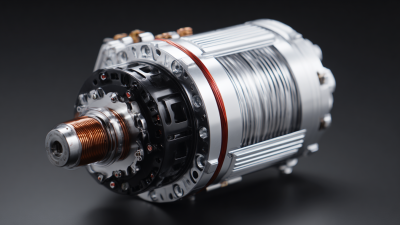
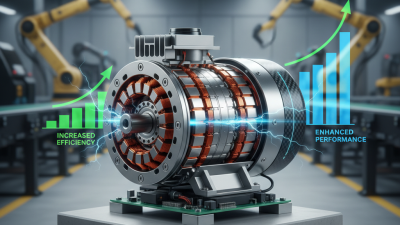
What Are the Top Large Brushless Motors?
Choosing the top Large Brushless Motors is not simply a matter of comparing wattage or advertised speed. A 50-kilowatt motor may look impressive on paper, yet fail when heat builds inside a sealed housing. Real performance depends on torque delivery, duty cycle, cooling design, controller compatibility, and load behavior. Small details matter. A heavy conveyor, marine pump, or industrial fan needs different motor characteristics. The “best” model is rarely universal.
Professor R. Krishnan, a respected electric-drive specialist, describes the technology clearly: “The brushless DC motor is a permanent-magnet synchronous motor with trapezoidal back emf.” That distinction helps explain why commutation, sensor feedback, and controller quality affect reliability so strongly. In demanding applications, engineers should examine continuous torque rather than peak torque alone. They should also check bearing protection, insulation class, ingress rating, regenerative behavior, and service support. A powerful motor with weak thermal management is not a strong choice.
This guide compares leading Large Brushless Motors through an engineering-focused lens. It considers efficiency, starting performance, vibration, noise, installation requirements, and long-term operating cost. Field conditions can be messy. Dust, misalignment, voltage variation, and sudden load changes may expose weaknesses that laboratory figures hide. Some product rankings remain debatable, too. That is worth admitting. A motor that excels in robotics may be unsuitable for a crusher or high-inertia pump. Readers should treat specifications as evidence, not promises, and match every recommendation to the actual machine, environment, and maintenance capability.
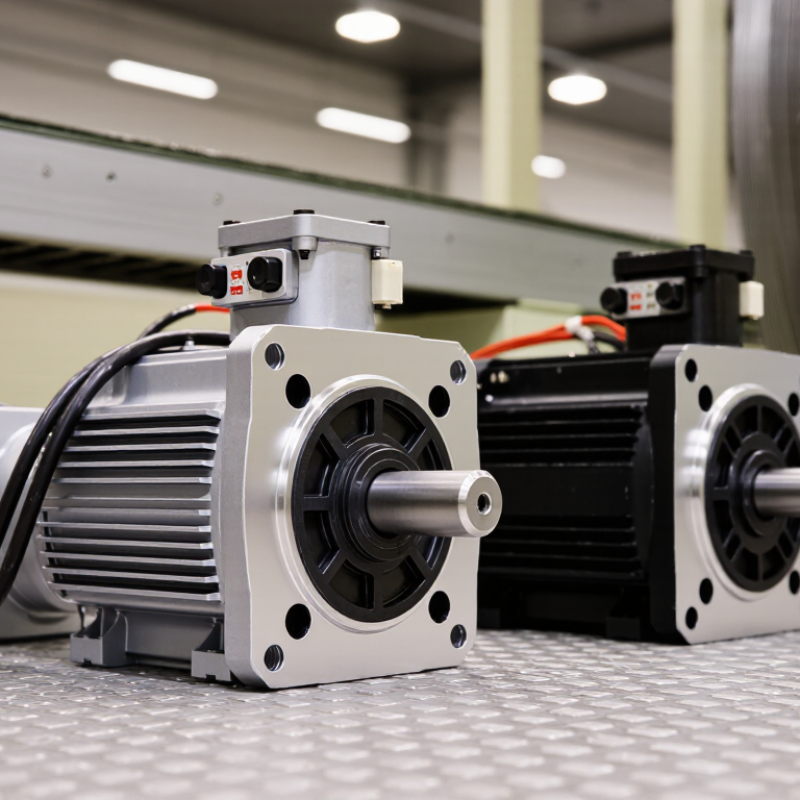
Understanding Large Brushless Motor Design and Operating Principles
What Are the Top Large Brushless Motors?
Understanding large brushless motor design starts with electromagnetic timing. A permanent-magnet rotor spins inside a wound stator. An electronic controller switches current between phase windings. This creates a rotating magnetic field without mechanical brushes. Hall sensors improve low-speed positioning, while sensorless control reduces wiring and potential failure points. However, sensorless systems can hesitate during heavy starting loads.
For large applications, motor quality depends on more than peak power. Engineers examine continuous torque, thermal limits, insulation strength, bearing life, and controller compatibility. Liquid cooling may protect windings when the motor operates near its rated load. The U.S. Department of Energy reports that motor-driven equipment represents more than half of industrial electricity use. The International Energy Agency also identifies efficient motor systems as a major energy-saving opportunity. These figures make small efficiency gains significant over long operating cycles. A high efficiency rating can still mislead if cooling fans consume excessive power. That detail is easy to miss.
Tips: Check the duty cycle, not only the maximum wattage. Measure winding temperature near the hottest phase. Keep phase cables short and tightly secured. In dusty environments, inspect seals and cooling passages regularly. I have found that conservative current limits often improve real service life, even when acceleration becomes slower. This is not perfect performance, but it is usually more dependable. Geological Survey? no. Use IEC 60034 testing methods when comparing efficiency and temperature data.
Key Performance Criteria for Comparing Large Brushless Motors
Comparing large brushless motors starts with the duty cycle, not the headline power rating. The U.S. Department of Energy reports that motor-driven systems use about 46% of global electricity. Small efficiency gains therefore matter at industrial scale. Check efficiency at continuous, intermittent, and low-speed loads. A motor delivering 96% efficiency at one point may perform poorly across the full operating range.
Thermal capacity is equally important. Review continuous torque, peak torque, winding temperature, and cooling performance together. A heavier housing may improve heat removal, but it can reduce power density. Watch the details. IEEE 112 testing methods improve efficiency comparisons, yet laboratory results may not reflect dust, vibration, or repeated acceleration. IEC 60034-30-1 efficiency classes also support clearer comparisons, although they do not replace application testing. I would examine controller compatibility, position feedback, bearing life, ingress protection, acoustic output, and regenerative braking behavior. Sensorless control can reduce hardware, but it may lose precision at very low speed. Field experience suggests that stable temperature data often reveals more than a short peak-power test. Some published specifications remain incomplete, especially regarding overload duration and cooling conditions. That limitation deserves attention before selecting a large brushless motor.
What Are the Top Large Brushless Motors?
Key performance criteria for comparing large brushless motors include continuous power, peak torque, and efficiency. The chart uses representative midpoints from common large-motor engineering ranges and excludes company or brand-specific data.
Higher continuous power and peak torque support demanding loads, while higher efficiency reduces heat generation and energy loss. Actual values vary with cooling, voltage, operating speed, duty cycle, and application design.
How to Select the Right Large Brushless Motor for Your System
What Are the Top Large Brushless Motors?
Selecting the right large brushless motor starts with the machine’s real operating load. Do not choose by peak power alone. Measure continuous torque, starting torque, speed range, and duty cycle. A motor may survive a brief overload, yet overheat during repeated acceleration. I have seen this mistake in conveyor systems. The selected motor had enough rated power, but insufficient low-speed torque.
Match the motor to the controller, battery, or power supply. Check voltage limits, continuous current, peak current, and commutation requirements. Sensor-based feedback can improve starting performance and low-speed control. Sensorless control may suit stable, high-speed applications. Mechanical fit also matters. Confirm shaft diameter, mounting holes, motor length, and cooling clearance. Measure twice. Small errors become expensive quickly.
Tips: Leave thermal margin instead of designing at the limit. Test the motor under the heaviest expected load, not an average load. Monitor winding temperature, vibration, current, and acoustic noise during trials. Consider an encoder when positioning accuracy matters. Review the manufacturer’s efficiency curve, not just its headline rating. Environmental details matter too. Dust, moisture, altitude, and restricted airflow can change performance. One imperfect assumption can affect the entire system, so document test conditions and revisit them after installation.